The best trapeze bar for bed mobility helps seniors, disabled individuals, and recovering patients sit up, reposition, and transfer with less strain. This guide highlights five top options, each offering strong support, adjustable height, and easy setup. Read on to compare which model fits different living situations, from home care to hospital-style environments.
| Product | Key Benefit | Best For |
|---|---|---|
| VEVOR Trapeze Bar, 350 LBS | Heavy-duty steel, high load capacity | Users needing maximum strength and stability |
| VEVOR Trapeze Bar, 300 LBS Free Standing | Two wheels for mobility, sturdy base | Small spaces, frequent repositioning |
| VEVOR 250 LBS, Free Standing | Balanced, compact design | Traditional bed transfers and rehab routines |
| Annzoe Trapeze Bar, 65–74″, 300 LBS | Tall, adjustable freestanding option | Taller beds or ceilings, long-term use |
| AOSSA Bed Trapeze, Ceiling Mounted | Ceiling-mounted for space efficiency | Rooms with solid ceilings and overhead mounting |
Below is a quick primer on who benefits most from each product and why these models stand out. This buyer’s guide uses clear comparisons to help you decide which trapeze bar best fits your space, mobility level, and safety needs.
VEVOR Trapeze Bar for Bed Mobility — 350 LBS
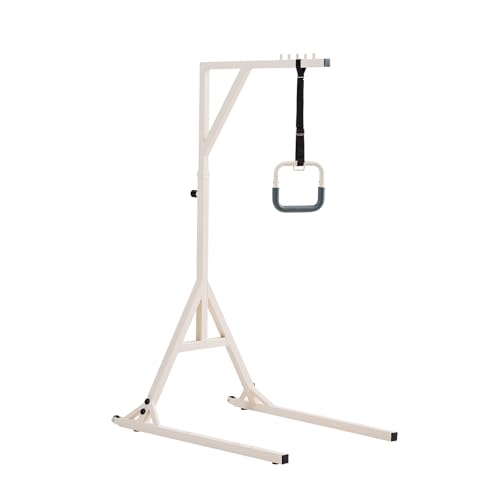
Best for users who require maximum strength and a stable frame. This trapeze bar uses a heavy-duty Q195 steel frame with a 350 lb load capacity. The reinforced base and top provide stability for getting in and out of bed or transferring to a wheelchair. Its height and handle height are adjustable, and the strap remains horizontally adjustable along the upper arm for versatile positioning. Choose this if you need a robust option that remains steady under heavier use. A limitation to note is that the setup may take more space due to its base design, which matters in tight rooms.
VEVOR Trapeze Bar with Wheels — 300 LBS

Best for compact spaces or rooms where mobility around the bed is needed. This model uses a heavy-duty frame with two wheels for easy repositioning and a 300 lb capacity. The height and handle height are adjustable, and the strap can be moved along the arm for multiple positions. It’s ideal for users who require a portable solution without a fixed bed mount. A caveat is that wheel-based frames may require attention to floor surface to prevent wobble on uneven tiles or carpet edges.
VEVOR Free-Standing Trapeze Bar — 250 LBS

Best for traditional bed transfers and daily rehab routines. This trapeze uses a heavy-duty steel frame and a triangular base to prevent wobbling. With a 250 lb capacity, it provides solid support for most adults while enabling independent repositioning. The adjustable height and strap support improve ergonomics during use. Limitations include potential footprint larger than pedestal styles, which may stretch space in small bedrooms.
Annzoe Trapeze Bar for Bed Mobility — 65–74″
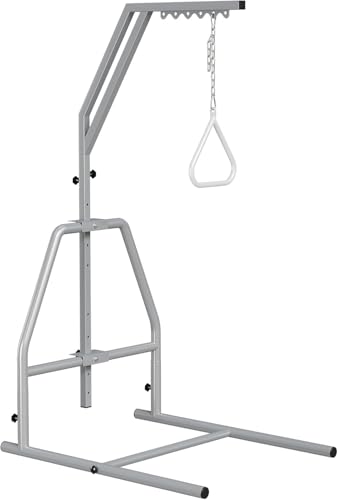
Best for taller beds and ceiling-height ceilings needing a freestanding option. This model extends 65″ to 74″ and supports up to 300 lbs, making it suitable for seniors and patients who require long reach and higher clearance. Its freestanding design avoids bed mounting, which reduces bed frame wear. A potential limitation is that very tall ceilings or tight rooms may require careful positioning to maximize usable height and space.
Lumex Versa-Helper Trapeze Bar — Bed Mobility
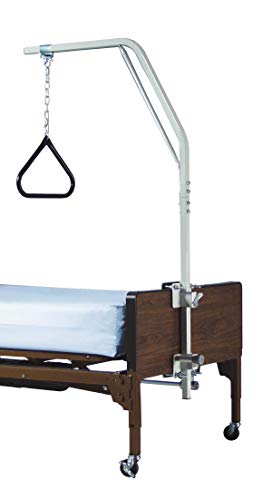
Best for independent transfers with simple clamp-to-bed mounting. The Versa-Helper features a triangular grab handle that adjusts for height and reach. It clamps to metal bed frames, saving floor space while providing strong support for repositioning and sit-to-stand motions. It’s a good pick for users who value a compact, frame-clamped solution. The trade-off is that it requires a compatible bed frame to clamp securely.
AOSSA Bed Trapeze — Ceiling Mount

Best for rooms with sturdy ceilings and a desire to maximize floor space. This ceiling-mounted trapeze includes a grab handle, strap, and mounting hardware to enable overhead support. It’s ideal for patients who need frequent up-and-stand transfers without occupying floor space. A key limitation is the need for secure ceiling mounting, which may require professional installation in some settings.
Buying Guide: Key Considerations for Choosing a Bed Trapeze
- Weight capacity: Match the trapeze’s load rating to the user’s weight and anticipated usage.
- Mounting method: Freestanding, clamp-to-bed, or ceiling-mounted designs each have space, bed-type, and installation implications.
- Adjustability: Height, handle position, and strap length determine comfort and safe positioning.
- Floor surface and room size: Base footprint and mobility features affect placement and ease of use in small spaces.
- Safety features: Non-slip handles, secure straps, and stable bases reduce fall risk during transfers.
- Material quality: Durable steel frames resist wear and bending with daily use.
Frequently Asked Questions
- What is a trapeze bar for bed mobility? A trapeze bar is a ceiling, freestanding, or bed-mounted handle with a strap to help a person reposition, sit up, or transfer from bed to a chair or wheelchair.
- Who should consider a bed trapeze? Seniors, patients with limited mobility, those recovering from surgery, and caregivers seeking safer bed transfers.
- What should I measure before buying? Measure bed height at the head and foot, ceiling height (for ceiling-mounted models), and available floor space for freestanding bases.
- Are bed trapeze bars easy to install? Most models provide straightforward assembly, but ceiling-mounted options may require professional installation for safety.
- Can trapeze bars be used as exercise tools? Yes, many users use trapeze bars to strengthen upper body and assist recovery, within individual care plans.
- Which model is best for small rooms? Freestanding models with compact bases or ceiling-mounted options that save floor space are typically better suited for tight areas.