Finding the right electric bed for an elderly loved one involves balancing safety, comfort, and ease of use. The top picks below are designed for home care, hospital-at-home setups, and seniors who need gentle repositioning, safer transfers, and independent adjustment. Each product is evaluated for durability, motor reliability, ease of operation, and suitability for different care needs. The following selections cover a range of features—from side rails to remote controls—so buyers can match a bed to daily routines and living spaces.
| Product | Best For | Key Benefit |
|---|---|---|
| Seniors needing full back/leg adjustment | Three motors for independent movement and easy daily care | |
| Caregivers valuing simple ergonomic positioning | Independent head and foot adjustments | |
| Home care with safety rails | One side rail and underbed light for nighttime visibility | |
| Long-term home care and recovery | Auto lateral turning and multiple position options | |
| Users needing safer transfers | Height range and pressure-relief mattress |
HaiyoHBED 2026 3 Function Electric Hospital Bed

The HaiyoHBED 2026 model offers independent backrest, leg rest, and bed height adjustments powered by three quiet motors. Its dual-motion design allows the back and leg sections to move together for smoother care tasks. Best for seniors who require frequent position changes and careful daily assistance. A durable steel frame supports up to 600 lbs and includes a height-adjustable IV pole for medical care needs. The mattress is breathable and the bed includes lockable casters and a detachable dining table for versatility. Caution: assembly and maintenance should follow manufacturer guidelines; ensure compatibility with any existing support equipment.
Med Mart Fully Electric Hospital Bed Set

The Med Mart bed set emphasizes ergonomic adjustability with independent head and foot positioning. It supports up to 450 lbs and uses a high-quality steel frame for stability. The dual-function approach makes it suitable for reading, watching TV, or resting in a preferred angle. It comes with half rails to enhance safety. Best for caregivers seeking straightforward, reliable electric adjustments with clear control via a simple system. Limitation: some users may benefit from additional rails or accessories for enhanced stability in longer-term use.
AbyssZen Adjustable Twin XL Bed Frame

The AbyssZen base focuses on safety and independence. It includes one side rail to reduce fall risk and a straightforward remote for easy operation. The design supports 8–14 inch foam or hybrid mattresses and provides a balanced platform for safe transfers. Best for seniors who value a single protective rail and nighttime lighting to navigate in darkness. Choose this if you need a compact, safety-focused base without multiple rails. Caution: One side rail may not be sufficient for users requiring full head-to-toe protection during sleep.
TYJTYDGF Electric Hospital Bed With Auto Turn

This 10-function bed offers a 0–45° lateral turning system to improve circulation and reduce pressure sores. Independent backrest and leg rest adjustments plus lateral tilt provide flexible configurations for meals, reading, and rest. Its quiet motors support overnight care with minimal disturbance. Best for long-term care or recovery scenarios where caregiver efficiency is a factor. Limitation: auto-turn features may require setup to suit individual care routines and can be less intuitive for first-time users.
ProHeal Electric Hospital Bed For Home Use
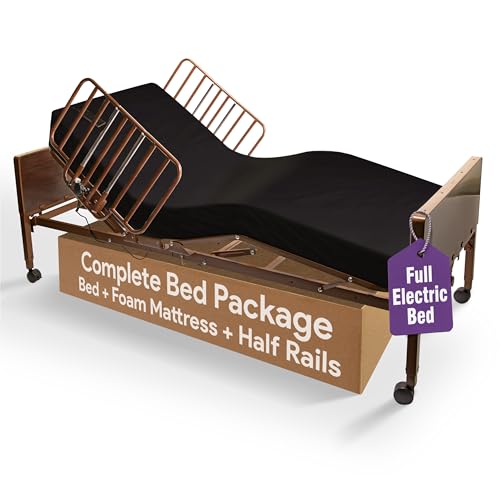
The ProHeal bed emphasizes safer transfers with a 15–23″ height range, a welded steel deck, and a 450 lb weight capacity. Its quiet, low-voltage motors and a pressure-relief, wipe-clean mattress add hygiene and comfort for elderly users. Best for homes prioritizing safer transfers and easy maintenance. Limitations include a potential need for additional rails or side accessories depending on user mobility and care routines.
Buying Guide: What To Look For In An Elderly Care Bed
Who should consider a full-electric hospital bed? People with limited mobility, caregivers seeking hands-free adjustments, or seniors recovering from surgery may benefit the most. Look for:
- Weight capacity and frame durability: A sturdy steel frame supports safer transfers and long-term use.
- Motor quality and noise level: Quiet, reliable motors reduce sleep disturbance for both user and caregiver.
- Range of articulation: Independent backrest, leg rest, and height adjustments allow multiple daily positions and comfort for eating, reading, or resting.
- Safety features: Side rails, lockable casters, and easy remote control access enhance safety during transfers and in low light.
- Accessibility and ease of cleaning: Mattress materials and wipe-clean surfaces improve hygiene and day-to-day care.
- Maintenance and compatibility: Consider features like IV poles, included rails, and ease of part replacement when needed.
What configuration best fits your home space?
- Compact rooms benefit from narrower frames and integrated rails.
- Rooms used for other activities may require beds with detachable components or tables for meals.
- Caregivers should consider remote controls with clear labeling and night-light features for nighttime tasks.
How important is a mattress choice?
A pressure-relief or high-density foam mattress improves comfort and reduces risk of skin breakdown. Look for moisture-wicking covers and compatibility with hospital bed bases.
Is auto-turning worth it?
Auto-turn can reduce caregiver burden and improve circulation, but it requires proper setup and may be more complex to operate for occasional users. Consider whether routine turning aligns with care plans.
Safety vs. independence
Rails and barriers increase safety for fall-prone individuals, but too much restraint may limit independence. Choose a model with adjustable rails or removable options to balance safety and autonomy.
How to choose the best bed for elderly care
Evaluate daily routines, space measurements, and caregiver capabilities. Prioritize devices with durable construction, reliable controls, and easy maintenance to support consistent use at home.
FAQ
- What is the typical weight capacity for these beds? Most models support 450–600 lbs with sturdy steel frames.
- Do these beds require professional installation? Many have simple setup, but some assembly or professional placement may be recommended.
- Are side rails essential? Rails improve safety during transfers, but some users may prefer fewer rails for easier mobility.
- Is auto-turning safe for long-term use? When properly configured, auto-turn can aid circulation and caregiver efficiency, though it may require familiarization.
- Can these beds be used with standard mattresses? Most bases are compatible with standard hospital-grade mattresses or foam toppers, depending on the model.
- What maintenance is needed? Regular cleaning, checking motor functions, and inspecting rails and casters help maintain performance over time.