
Choosing a hospital bed mattress that balances comfort, support, and easy maintenance can improve patient comfort, reduce caregiver burden, and support better skin health during extended stays. This guide highlights five top mattresses designed for pressure redistribution, durability, and compatibility with standard hospital bed frames. Each option emphasizes a different approach—from high-density foam cores with a U-core to fortress-shaped cells and alternating air systems. The quick-reference table below helps you compare core features at a glance and start a deeper look into the options that fit your care setting.
| Product | Brand | Key Benefit | Size |
|---|---|---|---|
| Invacare Softform Premier Hospital Mattress | Invacare | 3-zone, U-core design with high-density foam for pressure redistribution; supports up to 500 lb | 36″ x 80″ |
| Invacare Fortress Cells Hospital Mattress | Invacare | Five fortress-shaped cells for targeted relief and improved airflow | 80″ x 36″ |
| Kölbs NSR Long Term Care Mattress | Kölbs | Pressure redistribution foam with non-slip underside; suitable for extended care | 80″ x 36″ x 5.5″ |
| Medacure Pressure Redistribution Mattress | Medacure | Three-layer visco memory foam for even weight distribution and breathability | 80″ x 36″ |
| Vive Alternating Air Pressure Mattress Pad | Vive | 130 air cells with alternating pressure and a whisper-quiet pump for relief | Pad (size varies) |
Invacare Softform Premier Hospital Mattress
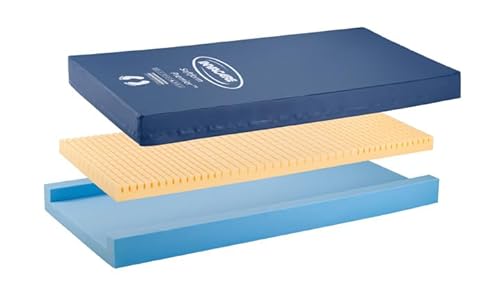
Invacare’s Softform Premier is a top-selling hospital mattress designed for pressure redistribution and patient comfort. It combines two independent foam layers with a unique single-piece U-core and a contoured foam insert that provide balanced support across the head, midsection, and feet. The three-zone construction targets essential areas while accommodating different body shapes and movement. Built with high-density foam on both layers, it resists wear and maintains edge stability, supporting up to 500 pounds. The durable core and cover aid longevity in busy hospital rooms or home-care environments.
Foam cells enable superior immersion and pressure redistribution, reducing high-risk contact points and helping mitigate skin injury. The combination of core structure and durable cover offers long-lasting performance in hospital rooms, long-term care facilities, and home-care settings. This model is favored where reliable support, durability, and straightforward maintenance matter most. Regular cleaning and a compatible bed frame will help maximize its lifespan, while its design supports caregivers in turning and repositioning patients with reduced effort.
Invacare Fortress Cells Hospital Mattress

Invacare’s Fortress Cells mattress focuses on targeted relief through five distinctive Fortress Shaped Cells. This design helps reduce skin stress and improve air flow across the surface, delivering targeted pressure relief during prolonged use. The fluid-resistant and easy-clean cover features a flat concealed zipper, sewn/welded seams, and a nylon top with a non-slip vinyl bottom, making maintenance straightforward in busy care settings. The mattress is mounted with a full anti-slip surface on the bottom to minimize shifting on various bed frames, which aids caregivers in maintaining a stable and secure sleeping surface for patients.
The Fortress Cells arrangement supports improved air movement and pressure distribution, essential for patients at higher risk of pressure injuries. A removable cover facilitates regular cleaning, while the durable foam construction provides long-lasting support under daily hospital use. The combination of comfort, protection, and secure placement makes this option a strong choice for facilities needing dependable performance with minimal maintenance.
Kölbs NSR Long Term Care Mattress

The Kölbs NSR long-term care mattress is designed to deliver dependable pressure redistribution for bedsore-prone patients. It uses a single-bed design with high-density foam that provides superior support and patient immersion. The non-slip underside keeps the mattress firmly in place on a medical bed, which is especially important for adjustable frames or beds with position changes. The mattress dimensions, 80 x 36 inches and 5.5 inches thick, are tailored for standard hospital beds, and the waterproof, removable cover simplifies cleaning and daily disinfection. Fire retardant materials add an important safety feature for clinical environments.
In addition to pressure relief, this model emphasizes stability and safety. The non-slip bottom reduces shifting during patient transfers and repositioning, while the waterproof cover makes it suitable for environments requiring frequent cleaning. For care settings that prioritize a straightforward, durable solution with good edge support, the NSR mattress offers a solid balance of comfort, safety, and maintenance practicality.
Medacure Pressure Redistribution Mattress
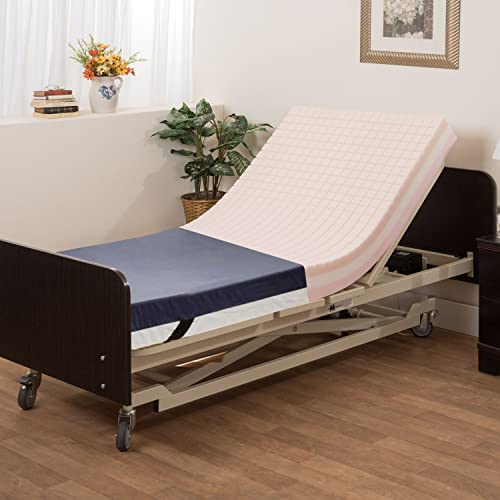
Medacure offers a pressure redistribution foam mattress designed to evenly distribute a patient’s weight across the surface, mitigating the formation of ulcers, lesions, and bed sores. The mattress features a convoluted foam cut that provides greater support while promoting airflow to reduce heat and moisture buildup—an important factor for skin health during extended bed rest. Available in multiple sizes, it allows facilities to select a fit that aligns with patient height and bed length. The emphasis on breathable foam layers helps maintain a cooler sleeping surface while still delivering effective pressure relief.
With a focus on comfort and long-lasting performance, the Medacure mattress uses a multi-layer approach to support and contour. The combination of pressure redistribution and breathability is designed to minimize discomfort in immobilized patients. For care teams seeking a memory-foam-like feel without sacrificing durability, this model offers a versatile option that accommodates a range of body types and bed sizes while providing consistent support over time.
Vive Alternating Air Pressure Mattress Pad

Vive’s alternating air pressure mattress pad provides immediate mattress relief for bed-bound patients. The surface uses 130 air cells arranged to alternately inflate and deflate, creating a dynamic surface that distributes weight and relieves pressure spots. The proprietary cycle reduces risk of pressure injuries and enhances comfort for immobile patients who struggle to shift themselves. A whisper-quiet pump with customizable controls offers several pressure levels to tailor support to individual needs, while the mattress pad’s durable construction supports long-term use in home care or clinical settings.
The pad design emphasizes ease of use and patient comfort. The 130 air cells work together to deliver consistent pressure redistribution, and the compact pump minimizes noise while providing reliable operation. The waterproof, breathable cover helps with hygiene and care routines, making it a practical option for caregivers prioritizing both pressure relief and infection-control considerations in home or facility environments.
Buying Guide
Key Size And Fit Considerations
Hospital bed mattresses commonly come in standard dimensions such as 80″ x 36″ (full-size hospital beds). When choosing, verify compatibility with the bed frame, including width, length, and rail design. Consider thickness as well; thicker cores can offer more comfort but may require bed frame clearance. For bariatric or heavier patients, select models with higher weight capacity and reinforced edge support. If the patient uses an adjustable bed, ensure the mattress remains stable during articulation and tilt movements.
Pressure Redistribution Technology
Different designs provide pressure relief in distinct ways. High-density foam cores with a U-core, like the Invacare Softform Premier, emphasize immersion and targeted support in three zones. Fortress-shaped foam cells, as seen in the Invacare Fortress Cells mattress, focus on cell-based relief and airflow. Foam layers with memory components, such as the Medacure model, blend contouring with breathable surfaces. Alternating air systems, like the Vive mattress pad, deliver dynamic pressure redistribution across countless cells. Consider the patient’s risk level for pressure injuries, skin integrity, and comfort preferences when selecting technology.
Surface Material, Cleanability, And Hygiene
Removable, fluid-resistant, and easy-to-clean covers are essential for hospital or home-care environments. Latex-free options reduce allergy concerns, while waterproof covers help with spills and disinfection. Anti-slip bottoms keep mattresses securely in place on bed frames, minimizing shifting during transfers. If the patient requires frequent cleaning or exposure to fluids, prioritize models with waterproof or fluid-resistant layers and straightforward maintenance routines.
Durability, Weight Capacity, And Longevity
Durability directly affects cost-effectiveness in long-term care. High-density foams and reinforced cores resist compression over time, preserving support. Weight capacity matters for bariatric or heavier patients, with some models supporting 450–500 pounds. A robust edge structure helps prevent sagging during transfers. For facilities with heavy daily use, select mattresses designed for prolonged service life and easier routine sanitation.
Care Settings, Safety, And Certifications
Consider whether the mattress will be used in a hospital, long-term care facility, or at home. Fire retardant materials enhance safety in clinical environments. Determine whether the mattress is compatible with adjustable bases and whether it includes certifications or clinical data supporting its use for pressure injury prevention. Accessibility features—such as easy cleaning, removable covers, and simple replacement—also influence ongoing maintenance and patient safety.
Cost, Availability, And Replacement Cycles
Budget considerations should weigh initial purchase price against expected lifespan and replacement needs. Some mattresses offer multi-year durability with low maintenance, while others may require more frequent changes due to wear. Availability through standard distributors simplifies restocking and equipment rotation. When evaluating cost, consider the total cost of ownership, including covers, cleaning supplies, and potential downtime for maintenance.